But seek ye first
Getting our priorities sorted out
This week we look at an often quoted, but mostly misunderstood, piece of advice given by Jesus during His sermon on the mountain:
33But seek ye first the kingdom of God, and his righteousness; and all these things shall be added unto you. – Matthew 6:33
We need to understand that whenever we find scripture that catches our attention, we should read it in context – the text preceding and following it, as well as the cultural and political context in which it is used. Too many Christians try to apply scripture out of context. The text first requires us to seek (actively chasing after or looking for) two things:
- the kingdom of God; and
- His righteousness.
Following our understanding of the above, we need to look at:
- these things.
To understand this verse, first go to Matthew 4:23 and read everything until Matthew 6:32. Then come back and continue here.
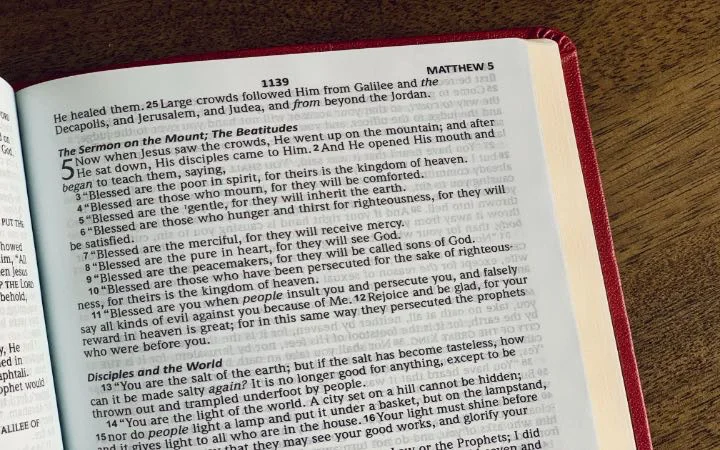
Jesus called his disciples (Matthew 4:18 ff). He healed the sick (Matthew 4:23-24). Because of this, the masses started following Him (Matthew 4:25). The first issue we have with the interpretation of the next verse, Matthew 5:1-2, is whether the multitudes in verse 2 refers to the people, the disciples, or both. We find the answer two chapters later, in Matthew 7:28:
28And it came to pass, when Jesus had ended these sayings, the people were astonished at his doctrine: 29For he taught them as one having authority, and not as the scribes. – Matthew 7:28-29
First, the people were astonished, not just the disciples. Second, he teaches them with authority, not as the Jewish leaders did who would quote the Old Testament but without any real-life application. Back to Matthew 5:1.
He teaches them (the disciples and the multitudes) from a mountain where His voice would travel further. His teaching is personal and hits the hearts of His audience. He discusses personal relationships, public display, prayer, and fasting. In Matthew 6:19 He changes course slightly, and this culminates in the key text we are looking at. We can decide to either gather treasure in this life, on the Earth, and see it wasted by others (moths, rust, and thieves), or we can gather treasure and prepare it for heaven. A key verse here is verse 21: For where your treasure is, there will your heart be also. This is a decision that each individual has to make. The problem is that it is impossible to accommodate both. One will have to give. You must decide which one (verse 24).
Because of this (Therefore, verse 25) Jesus’ advice is that we should not worry about this life – the practical requirements – and what we will eat, drink, and wear. If God takes care of the lesser creatures, He surely will take care of us, the highest form of His creation. He knows what we need (verse 32). Note that He is not talking about that new business contract, the luxury car, or the planned trip overseas. Instead, He focuses on needs for practical living.
Now we get to the crux of the matter. What are we to do? First, note that “the kingdom” was already mentioned in Matthew 6:10 – that we have an expectation for the kingdom of God [See The Kingdom of Heaven vs the Kingdom of God] to be realised in our lives. Everything we are should be under His authority, no matter what happens to us. God’s will for us must be visible in our lives. Now on to the next aspect we should seek. God’s righteousness is His holiness. We should live out His holiness and strive for sanctification [See Soteriology 11: Sanctification] every day of our lives:
15But as he which hath called you is holy, so be ye holy in all manner of conversation; 16Because it is written, Be ye holy; for I am holy. – 1 Peter 1:15-16
What Peter quotes is a command given in Leviticus 11:
44For I am the LORD your God: ye shall therefore sanctify yourselves, and ye shall be holy; for I am holy: neither shall ye defile yourselves with any manner of creeping thing that creepeth upon the earth. – Leviticus 1:44
The psalmist has this to say about righteousness:
172My tongue shall speak of thy word: for all thy commandments are righteousness. – Psalm 119:172
All God’s commandments are righteousness? All of them? This is what God says. There are no exceptions. This means we have to live lives that are obedient in every way:
3And hereby we do know that we know him, if we keep his commandments. 4He that saith, I know him, and keepeth not his commandments, is a liar, and the truth is not in him. 5But whoso keepeth his word, in him verily is the love of God perfected: hereby know we that we are in him. 6He that saith he abideth in him ought himself also so to walk, even as he walked. – 1 John 2:3-6
Years after the psalmist referred to God’s commandments as righteousness, the apostle John, the last living apostle at the time, says that we will only know Him if we keep His commandments; all of them. We have to speak His Word (Psalm 119:172) and we have to keep His Word (1 John 2:5). Keeping His commandments speaks of obedience and respect, something the world today does not have much of. It is up to us as believers to show the world obedience and respect. There is a great reward for those who keep His commandments:
14Blessed are they that do his commandments, that they may have right to the tree of life, and may enter in through the gates into the city. – Revelation 22:14
“Blessed are they” takes us back all the way to Matthew 5:1, the first words spoken by Jesus on the mountain to the multitudes!
We should ask ourselves what we as individuals have done to ensure that God’s kingdom and holiness are realised in our lives. We cannot expect “these things” (Matthew 6:33) to be given to us if the first two requirements have not taken root and are evident in our lives. There is a condition to be met before a result can be obtained.
Conclusion
This week, practice to first seek the kingdom of God and His righteousness. Next week we will look at the reward.