Life Lessons from Hebrews: Rahab
Hebrews 11:31 – Faith that rises above shame
By faith the harlot Rahab perished not with them that believed not, when she had received the spies with peace. — Hebrews 11:31, KJV (1611)
- The Gallery of Faith — Context
Hebrews 11 is a list of people who lived by faith — such as Abraham, Moses, Gideon. Great names. Heroes of the faith. And then, suddenly: Rahab. A foreigner. A Canaanite. A woman with a bad reputation.
- Her inclusion is not an accident — it is a declaration of what God can accomplish through people.
- God does not only use the so-called saints of this world. He uses the broken ones, the outsiders, the people no one else would choose.
- Rahab’s Past — The Outcast
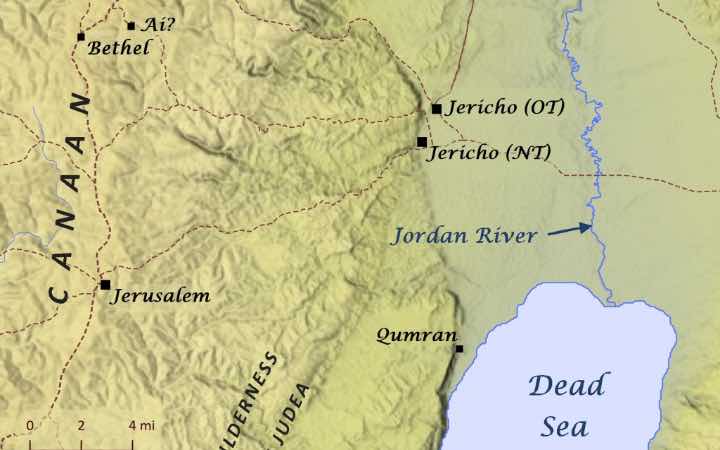
Rahab was a harlot in Jericho (Joshua 2). She was a Canaanite — an enemy of Israel. She lived on the margins of society, literally in the wall of the city. Her house was a place people visited in secret. Do read the whole passage from Joshua chapter one through eight to get the full context. Our cell group recently discussed the walls of Jericho, also as an act of faith — to act and do what God asks, even if it sounds absurd.
Yet it is this woman whom God chooses to save His people — and who ultimately appears in the genealogy of Jesus Christ (Matthew 1:5).
- Rahab’s Faith — What She Did
Rahab hid the Israelite spies when her own people came looking for them (Joshua 2:1–6). She put her life and the lives of her family at risk. She shifted her loyalty from her city to the God of Israel.
- Her faith was not theory — it was action against all expectation.
- The scarlet cord at her window (Joshua 2:18) was an act of trust — like the blood on the doorposts in Egypt. She believed before she saw.
We must remember that Israel did not pass through the wilderness in isolation. They were on their way to Canaan, and the local inhabitants knew it. See Joshua 2:9–11.
- Jesus and the Outcasts — What This Asks of Us
Jesus did not spend time with the religious elite. He sat with tax collectors, sinners, the sick, and outcasts (Luke 15; Mark 2:16–17). This was not accidental — it was His calling.
I came not to call the righteous, but sinners to repentance. — Mark 2:17
Three truths for us today
- Acknowledge your own brokenness.
Rahab did not hide her past. She came to God exactly as she was. Grace is not for people who have fixed themselves — it is for people who know they cannot do it themselves.
- Do not hide your brokenness.
In our home group, honesty is sacred. The people Jesus touched the most were those who knelt before Him without pretending. We do not urge each other towards perfection — we call each other to honesty.
- True faith sometimes requires that you set aside your reputation.
Rahab placed her status, her security, and her place in the community at risk. Faith that costs nothing is seldom faith. Do you follow Jesus only where it is comfortable?
Group Discussion
- Rahab’s past did not disqualify her — it made her part of the story. Which part of your past do you think makes you unfit for God’s use?
- Jesus deliberately spent time with people whom society rejected. With what kind of people are you willing to spend time?
- Is there an area in your life where you know God is asking something — but you are afraid of what people will think? What does it look like to lay your reputation in His hands?
Closing thought
Rahab is not remembered in the Bible as a harlot. She is remembered as a woman of faith.
God rewrites stories. He can rewrite yours too.