The Body of Christ
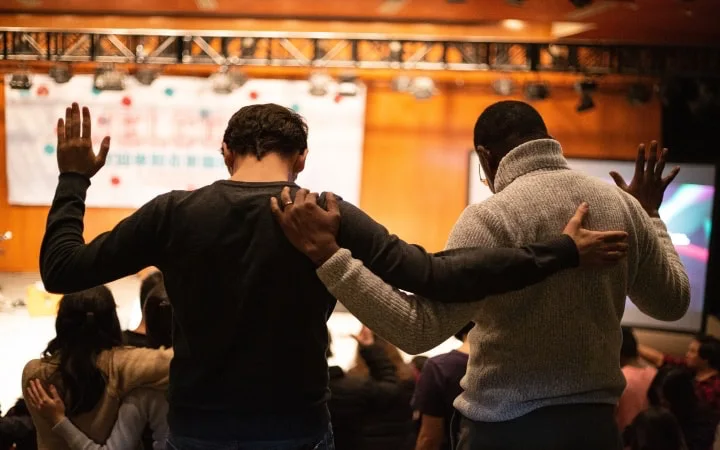
The Body of Christ: Believers Cannot Grow in Isolation
After spending many years working in a foreign country, in an area where a Christian community does not exist, back home I realised the value of Christian fellowship, the church. We were never meant to exist and grow in isolation, and like with a campfire, the coals individually allow the others to keep burning. Have you lost your desire to be a burning coal? Then this week’s lesson is for you.
22And the glory which thou gavest me I have given them; that they may be one, even as we are one: 23I in them, and thou in me, that they may be made perfect in one; and that the world may know that thou hast sent me, and hast loved them, as thou hast loved me. – John 17:22-23
It is clear from these verses that Jesus’ earnest desire was that they – His disciples and all that would become His followers – be one, just as He, the Father, and the Holy Spirit are one. Yet today we see so much division in the church. More so, we see many around us that have given up on the formal church, but maybe not on God. These are the ones we need to reach out to and get them back into the fold. I was taught the lesson of the campfire many years ago. A coal was moved a little bit way from the rest of the coals. After a while, the single coal lost its warm glow, and eventually started smouldering. It was not dead yet, but because it was not receiving sustenance from the rest of the coals, it was going to burn out and die. We are given a warning about this by the writer of Hebrews:
24And let us consider one another to provoke unto love and to good works: 25Not forsaking the assembling of ourselves together, as the manner of some is; but exhorting one another: and so much the more, as ye see the day approaching. – Hebrews 10:24-25
We are told to be considerate of the other person, and to do that which is good to others. As members of the church, we should not neglect meeting regularly, as has become the habit of many. Then we are told to exhort one another, to strongly encourage and persuade one another. This should increase in intensity as we realise that the day of Christ’s coming is getting closer. We see the signs of His impending coming all around us.
Think about your situation. Have you been neglecting meeting regularly with your local church? Have you been urged by fellow-believers to attend because they miss you? As you realise the coming of Jesus Christ is getting closer, are you getting more fearful about it, or is it still your blessed hope (Titus 2:13)? Maybe, like me for many years, you were in an environment where fellowship was difficult because there were no other believers to share time with. The minute I was out of that situation, I made a point of going to church as soon as I could. It was not even debatable. I had not sat down for one minute, and it was as if I could feel the warmth spread by the other members, without even speaking to any of them. God was watching over the fire all the time, and He made sure that He pushed that coal, me, towards the rest of the fire so that it could start burning again.
When I think back on all the years I spent away from home, without a church to attend, I realise that all the time God watched over me. I spent time fellowshipping alone, read my Bible, kept myself busy with the website, and ensured that I stayed committed and faithful. Maybe I was lucky. Maybe there are others that, in the same situation, would have faded away. I thank God for His watchful eye over me.
It could be that while reading this, you know that you left a church because others hurt you, or because of some disagreement. It has happened to all of us. We should remember that no one is perfect, and the differences we have are exactly what the devil uses to sow dissention in the church. You may think that you were the one who lost out. The other party may feel the same, so both of you are unhappy. Why not settle the differences the way God wants us to?
Esau and Jacob
One of the greatest examples of a massive rift between two people, and an ultimate reconciliation, is between Esau and his younger brother Jacob. Read the account, starting with Genesis 27 to the end of chapter 33. Despite the unjust treatment of Esau, eventually they reconciled, and Esau was the one who showed love and compassion towards his brother, who had essentially tricked him out of his birthright and his blessing. Time is a healer indeed.
Paul and Barnabas
We read of Paul and Barnabas who split up after an argument (Acts 15:36-41). Barnabas was instrumental in establishing contact between Paul and the apostles, and Barnabas and Paul worked in the ministry together (Acts 9:27; Acts 11:25; Acts 13:2; Galatians 2:1). The differences they had caused division, and each went his own way. Who was right and who was wrong was not really the issue right now. We read much later that they appear to have reconciled, although it may seem vague:
11Only Luke is with me. Take Mark, and bring him with thee: for he is profitable to me for the ministry. – 2 Timothy 4:11
Mark was the reason why Paul and Barnabas split up, and Paul was very much against Mark. If Paul now refers to Mark as valuable to his ministry, one could take from this that Paul may have reconsidered what happened between him and Barnabas. Time mended the broken relationship. The most important lesson we learn here is that there should not be any differences in the church. We are called as one body, and as God has reconciled us to Him through Jesus (2 Corinthians 5:18), so we should endeavour to reconcile after separation.
You and someone else
If you are in the situation where you are staying away from the church because of a difference with someone else, why not go back and be reconciled? You do not have to directly approach the other person. Maybe they feel the same way, and all it could take is for one other person in the church to bring you together again. If you still feel that you cannot face that person, then consider joining another church. At the end of the day, it is your spiritual growth and maturity that are at stake.
Conclusion
We are called to be one body, one in Christ, not individuals functioning on our own:
15And let the peace of God rule in your hearts, to the which also ye are called in one body; and be ye thankful. – Colossians 3:15
God loves the church, and He loves you. He does not want to see petty differences ruin what Christ died for (Ephesians 5:25). Go on now, you may still be in time to join today’s service!