At the right place, at the right time
The Gospel of John tells the amazing story of a sinner being at the right place, at the right time, to receive Jesus' Love, despite her condition of sin. Read John 4:1 through 42. Do not make the mistake to stop at verse 30. It is not the end of the story. My explanation here does not draw from commentaries written by others. It is purely how God reveals Himself to us when we take the time to study His Word.
Jesus never created unnecessary conflict. There are many examples that show that He would withdraw from crowds or places. The first three verses here set the scene. The Pharisees heard (and probably did not have first-hand experience) that He was baptising more people than John the Baptist (which turns out not to be true – He did not baptise people, his disciples did!). He withdrew from Judaea and left for Galilee. I think right now is a good to use a map of the time of the New Testament, just so that you can see exactly where these places are located.
Dangerous territory
Verse 4 says He had to go through Samaria. Because of conflict through many years, the Jews avoided travelling through Samaria if they could, they despised the Samarians. The reason for this goes back many years, after the kingdom was divided into the northern and southern kingdoms, where Samaria was the capital of the northern kingdom with Jeroboam as the king. Sometime later, after Israel’s fall to the Assyrians, the latter’s presence resulted in inbreeding and thus the Jews referred to them as dogs and half breeds.
Verse 5 shows that He arrived at a city called Sychor, close to a piece of ground that Jacob gave to his son, Joseph. There was also a fountain, a well, from which people had always drawn water and was well-protected.
The woman at the well
Jesus was tired, it was in the middle of the day and it was hot. Verse 6 explains this. the sixth hour is noon, as they day was counted from 6am in the morning. This would be absolutely the worst time of the day to be outside. Suddenly a woman appeared to draw water. This is unusual because drawing water was always the responsibility of the women, and they did it together. They would be safer this way. We need to understand that women were not really viewed with the same level of respect as men. If you were a Samaritan, it was even worse. We will see in a moment that there was a good reason she was out in the open alone, in the middle of the day.
Jesus did the unthinkable – He asked her, a Samaritan woman, for water. His disciples had gone off to buy food, and He was alone. The woman was obviously disturbed by this, and she even explains it to Him, as if He did not know already. In a way, He broke many social rules here – firstly, merely speaking to a woman in public was not the norm, worse if the woman was without her husband, and worse still if she was a Samaritan.
But Jesus is not interested in the woman’s background. See verse 10. He tells her that if she knew who was speaking to her, she would have asked Him for living water instead of drawing water from the well.
Her reaction and observation are sharp. She notices that He does not have a bucket with a rope and therefore there is no way that He would be able to draw water from the well. She compares Him to Jacob, whom the Samaritans called their father, and says that He is certainly not greater than Jacob.
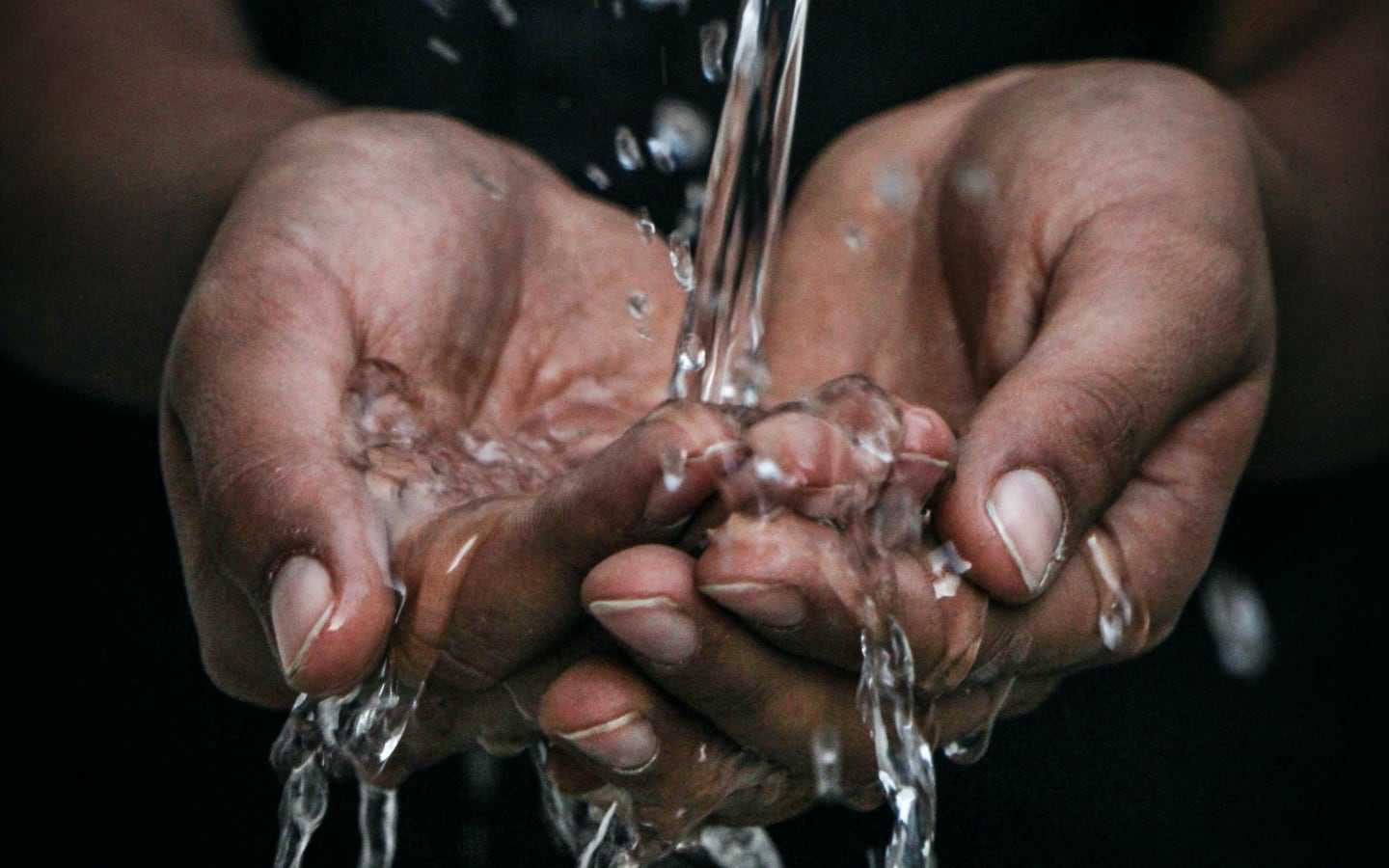
Jesus then hits here with these words: everyone who drinks from this water (from the well), will become thirsty again but anyone who drinks of the water that I give him, will never be thirsty again. In addition, that person himself will become a well from which water will gush forth!
The woman immediately asks Him to give her some of this water. After all, the idea of not having to fetch water in the heat of the day anymore, alone and scared of the stares of others, sounds very appealing. See verse 15.
Reaching into her heart
Jesus then asks her to go and call her husband. The obvious reason would seem to be that He does not want to have the conversation with her alone, which would not be acceptable. However, He already knows her background even if she had not yet told him about it herself. We can already sense the change here. She admits that she does not have a legal husband. Jesus delves in a bit deeper and tells her that it is true – she does not have a husband, she already had five before and the one she now has, she is not married to. The truth comes out and is the very reason this woman preferred not to be seen in public.
She is obviously stunned by this revelation, and verse 19 shows that she recognises Him as a prophet. She starts a political argument about where worship is supposed to take place. Is it not interesting that even in our time, people in various religious groupings still argue about something as petty as where and how you would worship?
Jesus corrects her, saying that a time will come where it is not about where anymore (religious observance) but Who – the Father! See verse 23. Jesus does state the mentality we should pray with. It is about worshiping Him in Spirit and in (the) Truth. We pray with the help of the Holy Spirit, and through Jesus as the Truth.
The woman is struck by this and then recalls that there is a promised Messiah who will tell them everything. She must have been stunned when He says that He is the Messiah who is speaking to her. He has revealed Himself to an unbeliever! Imagine if Jesus were to reveal Himself to you today…
The disciples return
The story is interrupted by the return of the disciples. They immediately see that He is speaking to a woman, and immediately they calculate the incorrectness of the situation. However, they decide not to say anything. The woman sees this as the perfect opportunity to leave and get out of sight. She does not even take the bucket. In fact, she never got around to collecting the water at all. She also does not go to call her “husband” as Jesus asked her to do but goes to the people and asks them to come and see a person who has revealed her secrets. Maybe He is the Messiah? So, the people go to Him to see for themselves.
The next part, from verse 31 to 38, seems to change the topic but Jesus explains to them His mission in a way they would understand. There is a harvest on the field, and it should be harvested.
The result
Verse 39 returns us to the original story. Many of those people who came to Jesus when the woman referred them to Him, now believe in Him. It is interesting to note that they say to the woman, maybe because they do not really want her in the picture anymore, that they no longer believe because of what she said, but because they have heard (verse 42) and they now know that He is truly the Christ, the Saviour of the world.
What really strikes me about this is that Jesus’ own people, the disciples and the religious leaders, doubt Him, distrust Him and scorn Him. Yet a nation already scorned by these same Jews have accepted Him as the Messiah!
Jesus does not care about your gender, social status, sinful nature, the time of the day or why you are hiding. He is interested in you! You may think that your sins are way more than what He is prepared to forgive. His Love is wider, higher, deeper and goes further than any situation you may be caught up in. Why not give Him a chance to give you living water?